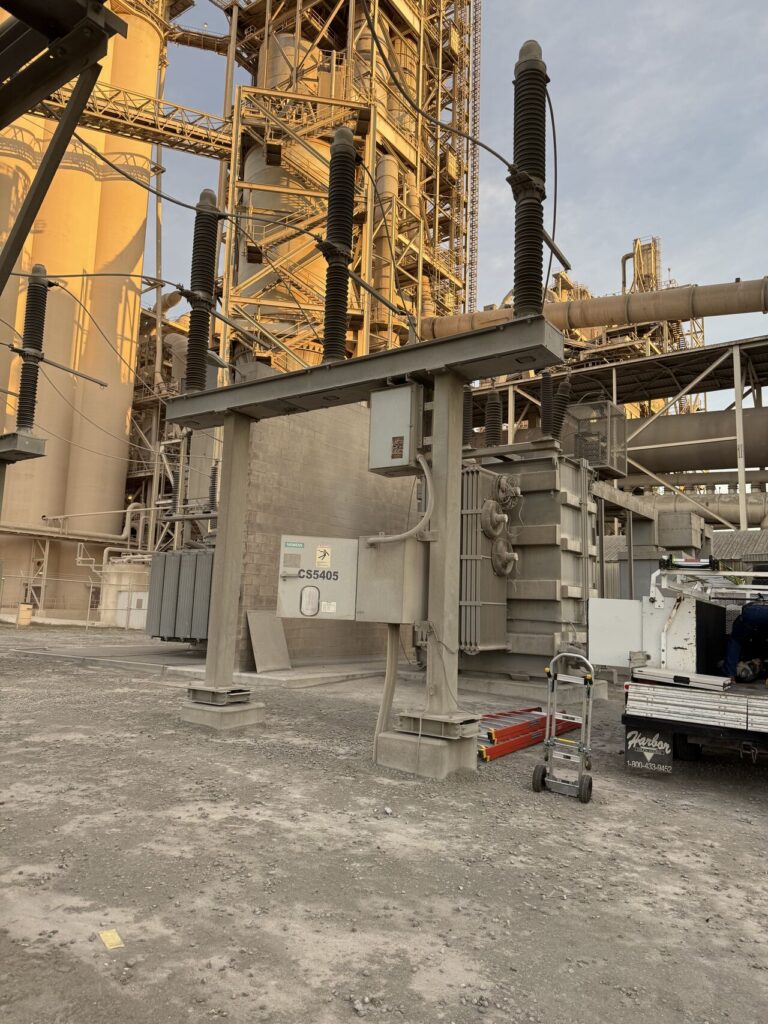
The primary difference between transformer testing and monitoring is frequency and depth.Transformer testing is a periodic, offline “snapshot” that delivers high-precision diagnostic insight into insulation condition and structural integrity. Transformer monitoring is a continuous, online “heartbeat” that tracks real-time trends in dissolved gases and temperature, allowing operators to intervene before a fault escalates. A modern reliability strategy requires both.
Why this decision matters in 2026 grid environments
With EV charging infrastructure expanding and renewable generation introducing volatile load swings, transformer stress profiles are no longer predictable. The question is not whether a transformer will age; it is how you observe that aging process.
In practice, organizations that rely solely on periodic testing can miss faults that develop between intervals. Conversely, operators who rely only on monitoring may detect stress signals but lack the deep diagnostics required to confirm mechanical damage.
This is whereTransformer Diagnosticsbecomes a strategic discipline rather than a maintenance checkbox.
Periodic testing: the deep-dive snapshot
Offline electrical testing requires the transformer to be de-energized and isolated from the grid (oil sampling for laboratory analysis, by contrast, can usually be done while energized).
The goal:
- Establish a baseline for new units
- Investigate a suspected issue
- Validate insulation condition after a grid event
Common testing methods include:
- Power Factor testing
- Sweep Frequency Response Analysis (SFRA)
- Winding Resistance testing
The value of testing:
- Detects insulation aging
- Identifies winding displacement
- Reveals mechanical shifts that online sensors may not detect
Frequency:
- Typically every 1–3 years depending on condition and criticality (ANSI/NETA MTS uses a 24-month baseline for electrical tests)
- Immediately after a fault or through-fault event
Testing delivers precision, but only at specific moments in time.
Online monitoring: the real-time heartbeat
Online monitoring systems use permanently installed sensors to track transformer performance while energized and under load.
The goal:
- Detect incipient (developing) faults
- Track stress trends over time
- Enable early intervention
Common monitoring parameters include:
- Dissolved Gas Analysis (DGA monitoring)
- Moisture-in-oil
- Top-oil and winding temperature
Why this matters: A sudden increase in hydrogen (H2) or acetylene (C2H2) can indicate partial discharge, arcing, or severe overheating, often well before failure. Continuous data transforms maintenance from reactive to condition-based maintenance.
Monitoring provides trend intelligence, but not full structural diagnostics.
Key differences between testing and monitoring
Instead of viewing these approaches as competitors, it is more accurate to understand how they differ operationally.
Data Type:
- Testing provides high-precision diagnostic data at a single point in time.
- Monitoring provides real-time trend analysis across weeks, months, and years.
Grid Impact:
- Testing requires a scheduled outage.
- Monitoring operates with zero downtime.
Detection Strength:
- Testing excels at identifying insulation aging and winding geometry shifts.
- Monitoring excels at detecting gas evolution and thermal runaway.
Cost Structure:
- Testing is typically service-based (operational expenditure).
- Monitoring requires hardware installation (capital expenditure).
Primary Driver:
- Testing supports compliance and baseline verification.
- Monitoring supports risk management and asset criticality planning.
The engineering logic: when to use which
The case for integrated diagnostics
The industry has largely moved beyond an “either/or” mindset. Thermal degradation follows cumulative aging principles described by the Arrhenius life equation:
Life = A · e^(B / T)
Here T is absolute temperature (kelvin). When operating temperature rises consistently, insulation aging accelerates exponentially and expected life shortens accordingly. Monitoring tracks thermal stress trends, while testing verifies the resulting damage.
If monitoring shows sustained top-oil temperatures above safe thresholds, waiting for the next five-year test cycle is not a risk-informed decision. A targeted diagnostic assessment should be scheduled promptly to evaluate insulation condition, for example using furan analysis of the oil as an indirect indicator of paper degree of polymerization.
Monitoring identifies stress. Testing confirms impact.
When monitoring is the priority
Monitoring is often prioritized for:
- Strategic assets serving data centers, hospitals, or major industrial hubs
- Aging transformers nearing end-of-life
- Units exposed to high load volatility from wind or solar integration
In these environments, early fault detection has significant financial and operational implications.
When testing is the priority
Periodic testing remains critical for:
- Commissioning new transformers and establishing a baseline
- Post-fault analysis following lightning strikes or through-faults
- Meeting insurance or regulatory compliance requirements
Testing validates structural integrity and confirms safe continued operation.
The reliability verdict
Field Note:
“The most expensive data is the data you get after a failure. Monitoring can flag developing problems, such as cooling system issues, that would otherwise go unnoticed until they cause serious damage. Monitoring tells you there is a problem. Testing helps pinpoint what to repair.”
Organizations that combine both approaches move from reactive maintenance to predictive reliability.
Bringing transformer diagnostics together
As discussed in our article on When Transformer Testing Is Required, lifecycle-based testing provides structure. Monitoring enhances that structure with continuous intelligence.
Together, these approaches form a unified transformer diagnostics strategy, one designed not just to pass inspections, but to protect critical infrastructure in increasingly dynamic grid environments.
How this article was researched
This article incorporates established transformer diagnostics practices, dissolved gas analysis methodologies, and condition-based maintenance principles aligned with industry standards and observed grid operating conditions.
Last fact-checked:February 2026