
Substation Services in Placer County, California
Placer County runs from rice country west of Roseville, barely a hundred feet above sea level, to the Sierra crest above Lake Tahoe at more than 9,000 feet. Few counties put that much range inside one line, and equipment ages differently at each end of it. Auburn, the county seat, is about 50 miles from our Woodland shop, roughly an hour's drive. We service substations, generation switchyards and customer-owned equipment across the whole county, from 12 kV distribution through 500 kV transmission class.
- ~50 miles
- Woodland shop to Auburn, approx.
- 100–9,000 ft
- Elevation across the county
- 12–500 kV
- Distribution to transmission
- 24-hour
- Emergency mobilization
Who owns high-voltage equipment in Placer County
Placer is a county of many owners. A city-owned utility runs Roseville on its own substation fleet, an investor-owned utility covers most of the rest, a federal power marketer brings 230 kV into the south county, and two separate hydro systems climb the American River canyons. Around the north shore of Lake Tahoe, a different utility again serves the basin. Which one owns the equipment decides the clearance process and the paperwork.
Roseville Electric
The City of Roseville's own utility serves about 43 square miles from 18 substations, over more than 1,000 miles of 60 kV and 12 kV line, roughly 86% of it underground. It buys wholesale federal power and runs its own generation at the Roseville Energy Park, which the California Energy Commission lists as a 160 MW combined-cycle plant, online since 2007.
Pacific Gas and Electric Company
PG&E owns the 230 kV and 115 kV transmission and the distribution across western and central Placer outside Roseville, including Rocklin, Lincoln, Loomis, Auburn and Colfax. Its Pleasant Grove substation off Industrial Avenue runs at 115/21 kV. The new Momentum substation, under construction since April 2026 with 230 kV breakers, is being built to serve the Placer One development and Sacramento State's planned Placer Center.
Western Area Power Administration
WAPA's Roseville substation is the 230 kV terminal of the Folsom–Roseville, Roseville–Elverta and Cottonwood–Roseville lines, the point where federal transmission meets the fast-growing south Placer load.
Placer County Water Agency
PCWA's Middle Fork American River Project (FERC P-2079) generates 224 MW from five powerhouses, led by Middle Fork at 122.4 MW and Ralston at 79.2 MW. It has run since 1967 and holds a 40-year license issued in 2020.
Drum-Spaulding Project
PG&E's Drum-Spaulding Project (FERC P-2310), 147.1 MW across Placer and Nevada counties, strings a chain of west-slope powerhouses including Alta, Drum, Halsey, Wise and Newcastle.
Liberty Utilities
Liberty Utilities serves the north shore of Lake Tahoe and is upgrading its 625 and 650 lines from 60 kV to 120 kV, work that touches the Kings Beach, Tahoe City and Northstar substations along the way.
What Placer County’s range does to substation equipment
One maintenance interval cannot fit a Roseville substation at valley grade and a hydro switchyard deep in the American River canyon. These three conditions separate them, and each drives a different failure mode.
-
Snow and ice above 3,000 feet
CPUC General Order 95 treats everything above 3,000 feet as a heavy loading district, designed for half an inch of radial ice at 0°F, and the county climbs well past that line on the way to the crest. Tahoe City averages about 190 inches of snow a year and recorded 499 inches in 1952. In January 2008 a single storm left about 45,000 customers in the county without power, some for up to six days. For upper-county switchyards, cold-weather checks belong in the plan: SF6 density alarms and breaker operating times at low temperature, heaters and thermostats in control cabinets, and bus supports and structures that carry snow load.
-
Fire in the American River canyons
The county's hazard mitigation plan places roughly two-thirds of its acreage in the Very High fire hazard class. The Mosquito Fire started near Oxbow Reservoir in September 2022, burned 76,788 acres across Placer and El Dorado counties, and took the Middle Fork American River hydro project offline for about six months. Canyon switchyards and the lines that tie them out are the exposed assets: heat damage, smoke and ash baked onto insulators and bushings, and access cut off for weeks. After a burn, cleaning plus a thermographic and acoustic survey before re-energization is what separates a clean restart from a second outage.
-
Foothill heat at Auburn
Auburn averages about 68 days a year above 90°F and reached 113°F in July 1972, and the county's own hazard plan notes that heat reduces substation and transmission capacity. For transformers that means thermal aging that accumulates quietly: top-oil temperature, winding hot spots, and cooling fans that run flat out every afternoon from June to September. Dissolved gas analysis and a spring infrared survey identify the units aging fastest before the heat does.
What we perform in Placer County
The scope we deliver, framed to Placer's asset mix: municipal distribution substations in the valley, hydro switchyards in the canyons, gas generation in the south county, and cold-climate equipment around the lake.
-
SF6 Leak Detection & Repair
Leak detection and repair for gas-insulated breakers from valley substations to high-elevation switchyards, where cold nights push SF6 density toward alarm thresholds and a slow leak first shows up as a winter lockout. Leak-rate quantification and verified repairs go straight into the CARB record.
-
Circuit Breaker Repair & Refurbishment
Remanufacture to factory specification, 12 kV through 500 kV, with the mechanism overhaul and timing tests that matter most for breakers that sit idle through a snowbound winter and must still operate on demand.
-
Preventive Maintenance & Diagnostics
Spring thermographic surveys ahead of the foothill heat, acoustic partial discharge surveys on energized gear, DC battery testing for remote switchyards, and maintenance plans sequenced around snow season and fire season.
-
High Voltage Consulting
Condition assessment and root-cause analysis after fire or storm damage, commissioning and relay testing for new capacity on the growing west side of the county, and lifecycle planning for hydro-era equipment.
-
Methane Leak Detection
Optical gas imaging for methane at gas-fired generation and its associated pipeline and compressor equipment, with pinpointed leak locations and severity estimates for the compliance file.
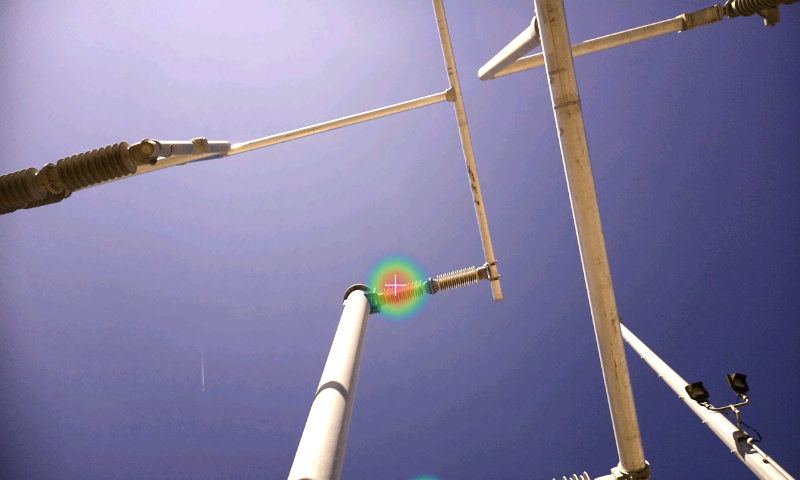
Acoustic Imaging for Partial Discharge
Partial discharge is the failure mode that gives the least warning. A discharge emits ultrasound, above the range of human hearing, so it is usually inaudible from the ground, and by the time an insulator flashes over the outage has already happened. Infrared shows the heat a discharge eventually produces; it does not show the discharge itself.
We run a FLIR Si-Series acoustic imaging camera with partial discharge classification. Its microphone array locates the ultrasonic source and overlays it on a live camera image from a safe standoff distance. The camera then classifies the discharge as negative corona, positive and negative corona, floating discharge, or surface or internal discharge, rates its severity from low to very high, and gives a recommended action. That distinction matters, because corona on a fitting and surface discharge across a contaminated insulator are different problems with different repairs.
In one survey of a 230 kV overhead line, the camera resolved discharge on a glass standoff insulator at 46.9 dB from five meters, classified it as surface or internal discharge, and rated it very high severity: strong enough that it might rapidly escalate to complete insulation breakdown. The standoff was also showing high thermal stress. The recommendation was immediate action: visual inspection, cleaning of the polluted surfaces, then repair or replacement of the component.
The regulatory picture for California operators
California asset owners carry obligations that operators in other states do not. We build the documentation into the job rather than producing it afterward.
CARB gas-insulated equipment rule
The California Air Resources Board's regulation on gas-insulated equipment, adopted in 2021 and in effect since 2022, phases out acquisition of new SF6 equipment by voltage class and short-circuit rating on dates running from 2025 to 2033. It pairs that with an annual CO2e emission limit, inventory and gas-handling records, and a yearly report due June 1. Existing equipment can stay in service, which puts leak rate and verified repairs at the center of the compliance record.
EPA greenhouse gas reporting
Under Subpart DD of the EPA Greenhouse Gas Reporting Program, owners of electrical transmission and distribution equipment report SF6 once estimated emissions reach 25,000 metric tons CO2e, the basis in force since reporting year 2025. EPA proposed removing Subpart DD in September 2025 but has not finalized that change, so the obligation stands; confirm the current status before relying on it either way.
NFPA 70B
NFPA 70B became a mandatory maintenance standard with its 2023 edition, calling for infrared inspection at least every twelve months, and every six months for equipment in the poorest physical condition. The 2026 edition, now current, also recognizes permanently installed continuous temperature monitoring. Thermography is on a fixed schedule rather than a discretionary one.
ANSI/NETA MTS-2023
The current maintenance testing specification, approved in March 2023, underpins the test intervals and acceptance criteria we work to. Its Chapter 7 sets out inspection and test procedures for substation equipment, circuit breakers among it, and our thermographic grading follows the NETA Table 100.18 temperature-difference thresholds.
Placer County FAQ
Don’t see your question? Call (833) 723-2723 and talk to a technician.
How far is Placer County from your Woodland shop?
Auburn, the county seat, is about 50 miles from our shop at 77 West Street in Woodland, roughly an hour’s drive, and Roseville and Rocklin are closer. Upper-county sites toward the lake take longer, and in winter the time depends on chain controls over the summit. Those figures are approximate; response times are confirmed against the specific site when we quote.
Which utilities own the grid in Placer County?
It depends on the address. Roseville is served by its own city-owned utility, most of western and central Placer by PG&E, and the north shore of Lake Tahoe by Liberty Utilities, while federal 230 kV transmission terminates at WAPA’s Roseville substation. We work for whoever owns the asset, from 12 kV through 500 kV, whichever utility the equipment interconnects with.
What does high elevation change about substation maintenance?
Above 3,000 feet, CPUC General Order 95 applies heavy loading assumptions of half an inch of radial ice at 0°F, and much of upper Placer sits well above that. Cold affects SF6 breakers directly, since gas density falls with temperature and a marginal leak can trip a low-density lockout on the first hard freeze. Access is the other constraint, so condition work at high-elevation switchyards is best finished before the snow.
How did the Mosquito Fire affect equipment in the county?
The Mosquito Fire started near Oxbow Reservoir in September 2022 and burned 76,788 acres across Placer and El Dorado counties. It took the Middle Fork American River hydro project offline for about six months. Fire leaves equipment that survived with contamination and heat stress that are not always visible, which is why a post-fire cleaning, thermographic and acoustic survey is worth doing before a full return to service.
When should thermography be scheduled in Placer County?
In two seasons, because the county has two climates. On the valley floor around Roseville and Lincoln, survey in spring, ahead of the heat, while there is still time to schedule repairs. In the high country, wait until snowmelt opens access and load is representative, then finish before fire season restricts work in the canyons.
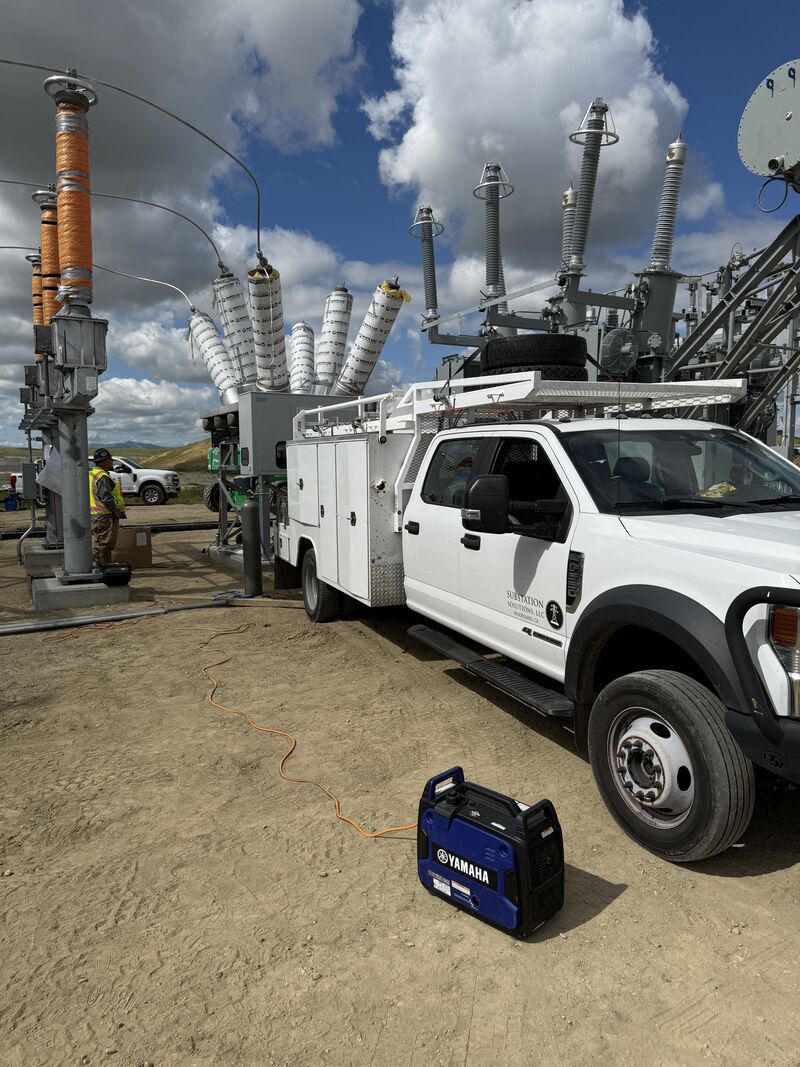
From the Valley Floor to the Crest
Whether it is a distribution substation in the valley, a canyon switchyard or equipment above the snow line, tell us what you have and we will tell you what it needs.