
Partial Discharge Testing and Detection
Partial discharge is the failure mode that gives the least warning. We locate it on energized equipment with acoustic imaging, classify what we find and grade its severity, so corona on a fitting and surface discharge across a contaminated insulator each get the repair they actually need.
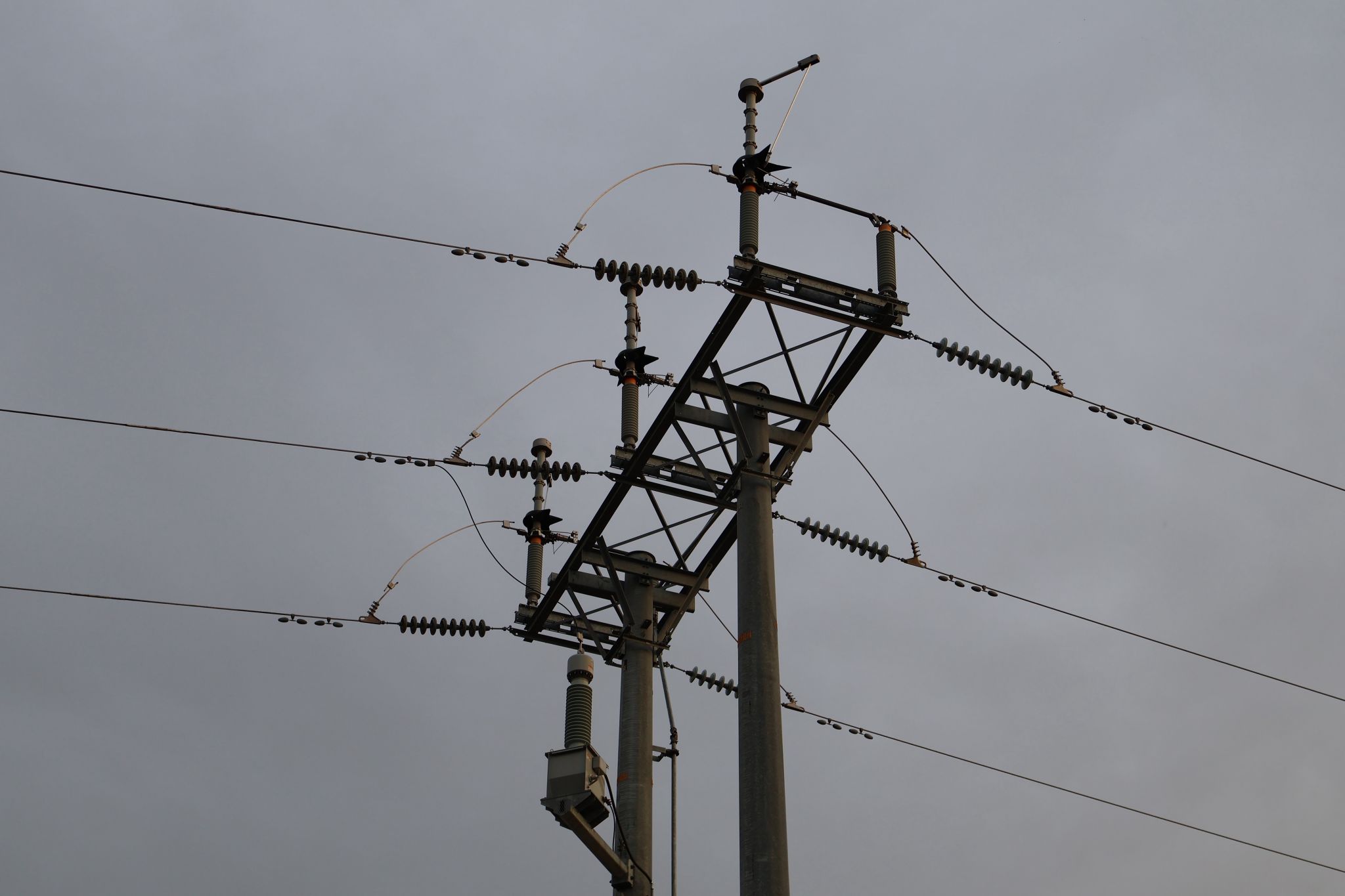
- No outage
- Surveys on energized equipment
- 4 PD types
- Classified in the field
- Low–Very High
- Severity grading
- 12–500 kV
- Distribution to transmission
Acoustic Imaging for Partial Discharge
Partial discharge is the failure mode that gives the least warning. A discharge emits ultrasound, above the range of human hearing, so it is usually inaudible from the ground, and by the time an insulator flashes over the outage has already happened. Infrared shows the heat a discharge eventually produces; it does not show the discharge itself.
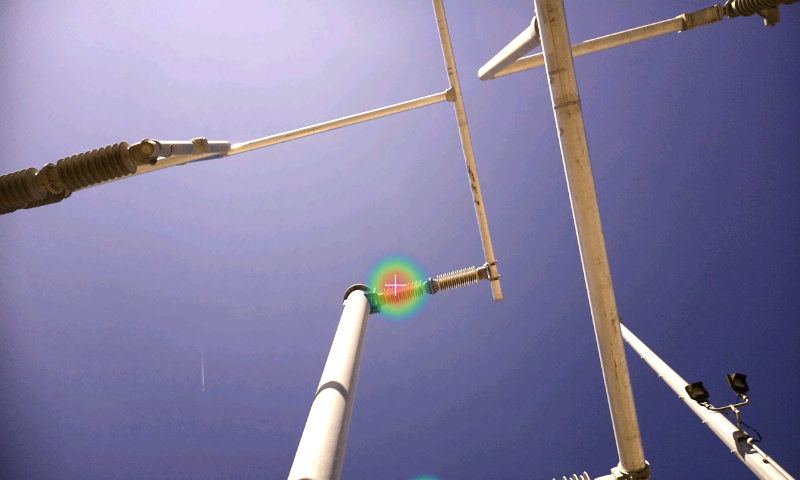
We run a FLIR Si-Series acoustic imaging camera with partial discharge classification. Its microphone array locates the ultrasonic source and overlays it on a live camera image from a safe standoff distance. The camera then classifies the discharge as negative corona, positive and negative corona, floating discharge, or surface or internal discharge, rates its severity from low to very high, and gives a recommended action. That distinction matters, because corona on a fitting and surface discharge across a contaminated insulator are different problems with different repairs.
In one survey of a 230 kV overhead line, the camera resolved discharge on a glass standoff insulator at 46.9 dB from five meters, classified it as surface or internal discharge, and rated it very high severity: strong enough that it might rapidly escalate to complete insulation breakdown. The standoff was also showing high thermal stress. The recommendation was immediate action: visual inspection, cleaning of the polluted surfaces, then repair or replacement of the component.
What an Acoustic PD Survey Can Find
According to FLIR's guidance for its acoustic imaging cameras, these are the forms of partial discharge the technology detects on high-voltage equipment.
Corona on lines and fittings
Corona discharge on high-voltage power lines, which the camera separates into negative corona and positive and negative corona.
Surface discharge on insulators
Surface discharge on insulators and bushings: the class of finding behind the 230 kV glass standoff survey above, where the recommendation included cleaning of polluted surfaces.
Internal discharge
Internal discharge within transformers and switchgear, reported together with surface discharge as a single class by the camera.
Tracking and arcing
Tracking and arcing in electrical connections, located against a live image so the affected connection can be identified.
Cable joints and terminations
Partial discharge in cable joints and terminations, surveyed from a safe standoff distance with the circuit energized.
Floating components
Floating discharge, one of the four classes the camera reports, each with a severity rating and a recommended action.
How an Acoustic Partial Discharge Survey Works
The survey happens with equipment energized and under normal load. Nothing is taken out of service to find the problem.
-
Scan
The yard and its equipment are scanned to pick up every ultrasonic source, then each source is examined individually in detail.
-
Locate
The camera's microphone array uses beamforming to pinpoint the source and overlay it on a live visual image, even in a noisy environment.
-
Classify and grade
A phase-resolved partial discharge pattern classifies the source as negative corona, positive and negative corona, floating discharge, or surface or internal discharge, and rates severity from low to very high.
-
Report and recommend
Each finding is documented with the image, sound level, distance, voltage, classification, severity and a recommended corrective action.
Partial Discharge Testing FAQ
Don’t see your question? Call (833) 723-2723 and talk to a technician.
What is partial discharge?
Partial discharge is a small electrical discharge that bridges only part of the insulation between conductors. It emits ultrasound and slowly damages insulation, and left alone it can escalate to a complete insulation breakdown and an unplanned outage.
Can you detect partial discharge without an outage?
Yes. Acoustic imaging works on energized equipment under normal load from a safe standoff distance. The survey locates the ultrasonic signature of the discharge against a live camera image, classifies it and rates its severity, with nothing taken out of service.
What types of partial discharge can you identify?
The camera classifies discharge into four types: negative corona, positive and negative corona, floating discharge, and surface or internal discharge. Each comes with a severity rating from low to very high and a recommended action, because the right repair depends on the type.
How does acoustic PD detection compare with infrared thermography?
Infrared shows the heat a discharge eventually produces; acoustic imaging shows the discharge itself, often before significant heat builds. They are complementary, and in one survey of a 230 kV line both applied: the acoustic camera found very high severity surface discharge on a glass standoff that was also showing high thermal stress.
Do you offer continuous partial discharge monitoring?
Our partial discharge work is periodic acoustic surveys, which suit most substations and switchyards. Where an asset justifies permanently installed monitoring, our high voltage consulting team can help specify and plan it.
Testing and Diagnostics Articles
Transformer Power Factor Testing: What Doble Test Results Actually Tell You
What transformer power factor (Doble) test results actually tell you: what the test measures, limits and temperature correction, bushings, and when to act.

Transformer Oil Testing: What Each Test Tells You and How Often to Run It
Transformer oil testing explained: what DGA, dielectric breakdown, moisture, acid number, interfacial tension, and furan analysis each reveal, how often to sample under NETA MTS-2023, and…

Partial Discharge Testing in Substations: Methods, Standards, and When to Schedule It
How partial discharge testing works: TEV, UHF, HFCT, and acoustic methods, plus when to test.
Find Partial Discharge Before It Finds You
Tell us about the equipment you are concerned about, or the yard you want surveyed, and our technicians will locate, classify and grade what is there while it stays in service.