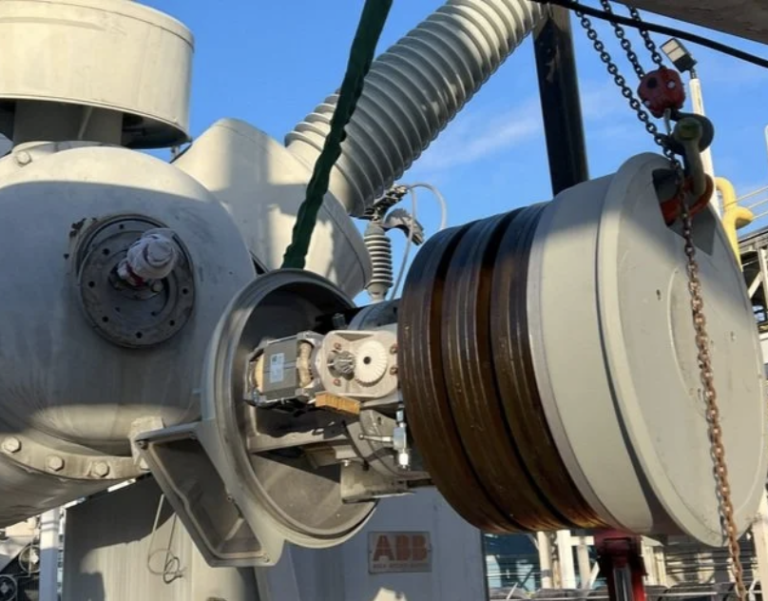
An SF6 gas detector is a handheld or fixed instrument that senses sulfur hexafluoride in air so technicians can find leaks on circuit breakers, gas-insulated switchgear, and fittings, or warn workers when gas builds up indoors. Substations rely on three groups of tools: portable sniffers (infrared, negative ion capture, or electron capture sensors) that pinpoint a leaking joint, optical gas imaging cameras that scan wide areas, and fixed room monitors that protect people in enclosed spaces. A fourth device, the gas density monitor on each breaker, does not detect leaks directly but alarms when density falls. Choosing the right detector depends on the sensitivity you need, where the equipment sits, and how you will prove the instrument was calibrated before the reading counted.
Why Detector Choice Matters More in 2026
The installed SF6 fleet is not going away soon, but the rules around it keep tightening. California’s CARB regulation began phasing out new SF6 gas-insulated equipment in 2025 and moved annual limits from a rate basis to a mass basis. New York’s Part 495 starts a voltage-based phase-out of new SF6 equipment in 2027 and adds a 1% systemwide emissions limit, on a 3-year rolling average, in 2030. Massachusetts already caps the annual leak rate at 1% for GIS purchased after 2015.
Federal reporting is in flux but still active. In October 2026, EPA issued an interim final rule moving the Greenhouse Gas Reporting Program deadline for reporting year 2025 to March 10, 2027, which applies to Subpart DD electrical equipment reporters along with every other source category. Meanwhile, OEMs keep expanding SF6-free options: at CIGRE 2026 in August, Hitachi Energy added a 245 kV dead tank breaker that Hydro One has ordered for Ontario. Older SF6 assets will share substations with new equipment for decades, and every pound that leaks from them still has to be found, fixed, and documented.
The pattern in the field is consistent: utilities that track leaks with calibrated instruments and logged readings spend less time arguing about emission numbers and more time fixing the joints that actually leak.
The Main Types of SF6 Gas Detectors
- Infrared (NDIR) sniffers: A non-dispersive infrared sensor measures how much infrared light the sample absorbs at SF6’s absorption band. DILO rates its NDIR LeakSpy for leaks down to about 3 g per year and states it has no cross-sensitivity to moisture or VOCs. NDIR units are durable and need no consumable gases, which makes them a common choice for routine breaker rounds.
- Negative ion capture (NIC) sniffers: These sense the drop in ion current when electronegative SF6 molecules capture electrons. EPA conference material on detection technology placed NIC and electron capture several orders of magnitude more sensitive than infrared or laser imaging, without a radioactive source.
- Electron capture detectors (ECD): Highly sensitive, but older ECD designs use a radioactive Ni-63 source that requires licensing, consume high-purity argon, and need recovery time after heavy exposure.
- Optical gas imaging cameras: These visualize the plume from a distance so a crew can scan a whole bay without touching equipment. We cover the method in detail in our post on <a href=”/post/how-sf6-leak-imaging-works”>how SF6 leak imaging works</a>. Cameras find the area, and a sniffer usually confirms the exact joint.
- Fixed area monitors: Diffusion or pumped sensors mounted in GIS rooms, vaults, and cable trenches. They are personnel safety devices first and leak finders second.
Most of our SF6 leak detection and repair work pairs at least two of these: imaging to sweep the yard, then a calibrated sniffer to locate and quantify each leak before repair.
Sensitivity, Leak Rates, and What the Numbers Mean
Detector sensitivity only matters in relation to the leak rate you are trying to catch. IEC 62271-1 lists 0.5% and 1% per year as the standardized leakage rates for closed pressure systems, and sealed pressure systems are expected to leak about 0.1% per year or less. On a breaker holding tens of kilograms of gas, a 0.5% annual loss is a slow seep that a pressure gauge may not show for years, which is why a sniffer rated in grams per year is the right tool for confirming it.
A few field factors change what a detector can actually see:
- Pump-draw versus diffusion: Pumped probes pull a sample into the sensor, which gives faster response and fewer wind-related misses around tight flange arrays than passive diffusion units.
- Background gas: After gas handling and recovery work, residual SF6 can raise the baseline. Better instruments let you zero against existing background so a small leak still stands out.
- Probe technique: Field guides recommend holding the probe 1 to 3 cm from the surface and moving about 1 to 2 cm per second, slowing down at density monitor fittings, valves, bushing bases, and O-ring joints disturbed during the last maintenance window.
Gas Density Monitors: The Detector Already on Your Breaker
Every SF6 breaker and GIS compartment has a density monitor, and it is easy to overlook as part of the detection program. Insulation and interrupting strength depend on gas density, not raw pressure, because pressure swings with temperature even when the gas quantity is unchanged. Most monitors compensate to a 20 °C reference so a cold morning does not look like a leak and a warm compartment does not hide one.
Density monitors typically drive two stages: a first alarm that calls for refilling and investigation, and a lower lockout or trip setpoint that blocks operation because safe interruption can no longer be assured. Setpoints come from the equipment manufacturer. A good density monitor check during circuit breaker maintenance confirms each switching point on falling pressure, records the reset point on rising pressure, and compares the hysteresis to prior results, since drift can signal aging contacts. Calibration valves let technicians isolate the monitor and test it with minimal gas loss rather than venting the compartment. Gas quality is a separate question: moisture, purity, and decomposition products are measured through gas analysis, not leak detection.
Calibration and Documentation: Making Readings Count
A leak reading is only as defensible as the instrument behind it. Our founder, Brad Webb, served as an Electric Standards & Work Methods Specialist at PG&E before starting Substation Solutions, and that background shapes how we treat calibration: as a record, not a formality.
Action Steps
- Zero each sniffer in clean air, well away from any SF6 source, before every inspection campaign, and confirm the display returns to zero within tolerance.
- Span-check against a certified SF6 reference gas on the manufacturer’s stated interval, and again after any instrument repair. Keep the certificates with your Subpart DD, CARB, or New York leak records.
- Log every asset scanned, the location on the equipment, and the peak reading, including zero readings, so the record shows coverage and not just failures.
- Re-scan repaired joints with the same calibrated instrument and record the post-repair reading as proof of remediation. If you are weighing leak mitigation versus repair, those trend records drive the decision.
- Test density monitor alarm and lockout points with a temperature-aware reference, and keep the results with the breaker’s maintenance history.
The question asset managers raise most often is how to make leak data hold up during an audit. The answer is almost always calibration records and consistent logging, not a more expensive detector.
Frequently Asked Questions
What is the most sensitive type of SF6 gas detector?
Negative ion capture and electron capture sniffers are generally the most sensitive handheld options, able to pinpoint very small leaks. NDIR infrared detectors are less sensitive but durable and low-maintenance, and NDIR units rated to a few grams per year are sufficient for most breaker rounds.
Is SF6 gas toxic to workers?
Pure SF6 is not considered toxic, and OSHA sets a permissible exposure limit of 1,000 ppm as an 8-hour time-weighted average. The main hazard is asphyxiation, because SF6 is about five times heavier than air and can displace oxygen in trenches, pits, and basement GIS rooms. Arc byproducts in faulted equipment are a separate and more serious hazard.
Do I need a fixed SF6 monitor in a GIS room?
Enclosed or below-grade rooms where gas can accumulate are strong candidates for fixed monitoring, and a risk assessment should decide whether those spaces are treated as confined spaces. Outdoor yards are usually covered with portable instruments instead.
How often should an SF6 leak detector be calibrated?
Follow the manufacturer’s stated span calibration interval, zero the instrument before each inspection campaign, and recalibrate after any repair.
Can a density monitor replace a handheld leak detector?
No. A density monitor tells you that a compartment is losing gas, but not where. A handheld sniffer or imaging camera is needed to find the leaking joint so it can be repaired.
Do SF6 detectors work on SF6-free gas mixtures?
Not automatically. Many SF6-free designs use fluoronitrile or other gas blends, and SF6-calibrated sensors and density monitors may not read those mixtures correctly. Confirm detector and monitor compatibility with the equipment OEM before relying on them.
Get a Calibrated SF6 Leak Survey From a Field-Led Team
We support substation owners from 12 kV through 500 kV with SF6 leak surveys, leak-rate quantification, and documented repairs. If your SF6 fleet is heading into a tighter reporting year, schedule a consultation or request a quote. For broader programs that combine leak work with infrared thermography and condition-based maintenance, our maintenance team can bundle the scope. If your sites also carry gas pipelines or compressors, we can add methane leak detection to the same visit, and our high voltage consulting group can help build the inspection standard behind it.