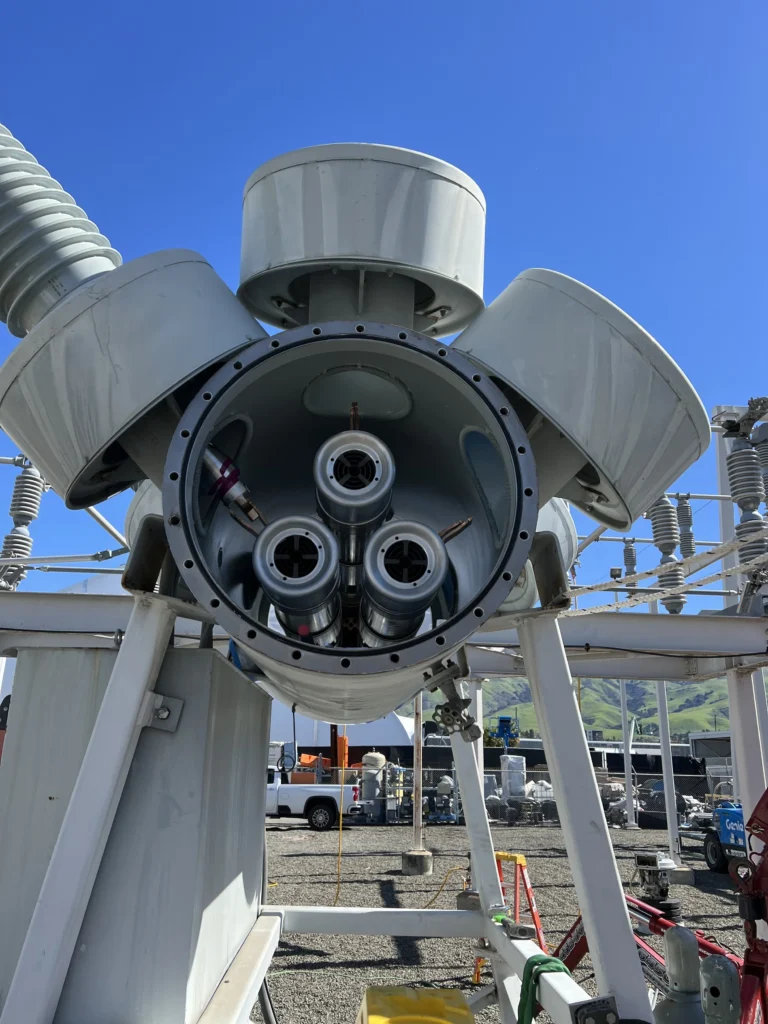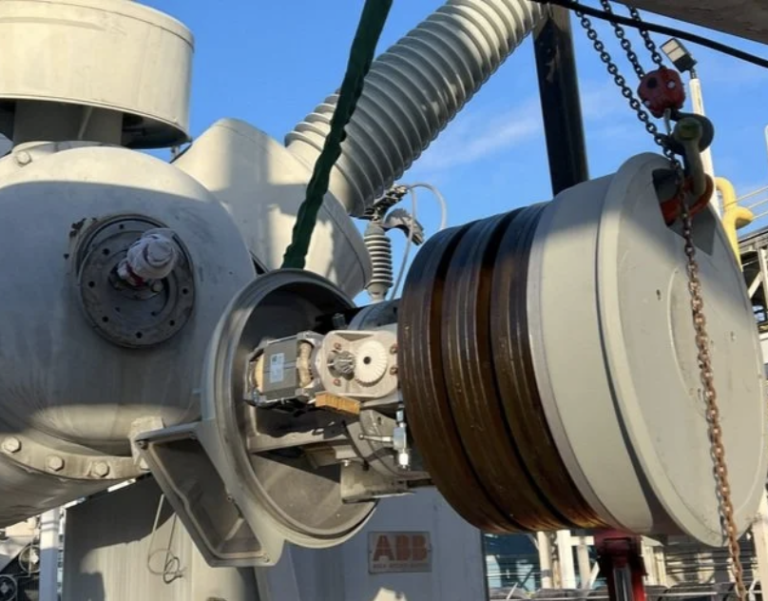
High-voltage circuit breakers should be inspected visually every month, tested mechanically every 12 months, and tested electrically every 12 to 36 months, with the exact interval set by breaker type. The ANSI/NETA MTS-2023 frequency table sets base intervals for full electrical maintenance of 12 months on high-voltage oil and SF6 breakers, 24 months on medium-voltage vacuum breakers, and 36 months on medium-voltage oil and most air-frame designs, before adjustment for equipment condition and reliability requirement. Drawing on our founder’s 18-plus years of utility and substation experience, we treat these tables as a starting point: criticality, duty cycle, and prior test trends pull intervals tighter or push them wider. This post lays out the current standards, the core tests that belong in every cycle, and how leading utilities are moving from time-based schedules to condition-based programs.
NETA MTS-2023 Frequency of Maintenance: The Baseline Schedule
ANSI/NETA MTS-2023 is the most widely cited maintenance testing standard for North American substation owners and the document NETA-accredited testing firms work from on site. The Frequency of Maintenance Tests appendix breaks circuit breakers into seven categories and assigns three test tiers to each: a monthly visual check, a yearly visual and mechanical inspection, and a periodic full visual, mechanical, and electrical test. Those are base values: NETA multiplies them by a factor from 0.25 to 2.5 depending on equipment condition and reliability requirement.
The baseline electrical-test intervals our crews plan around for substation-class breakers are:
- Oil, high-voltage: 12 months for full visual, mechanical, and electrical testing, plus 12-month oil sampling.
- Oil, medium-voltage: 36 months for full electrical testing, plus 12-month oil sampling.
- SF6: 12 months for full electrical testing.
- Vacuum, medium-voltage: 24 months for full electrical testing.
- Air, medium-voltage and low-voltage power: 36 months for full electrical testing.
- Air, insulated-case and molded-case: 36 months for full electrical testing.
NETA itself flags the frequency matrix as a guide, not a mandate. The standard’s own commentary reminds owners that a reliability-based program is unique to each plant and to each breaker, and that historical test data and trending should pull intervals tighter where condition warrants. That is exactly the approach we recommend during a high voltage consulting engagement: anchor to NETA, then adjust for duty, criticality, and trend.
Why Breaker Type Drives Different Intervals
Three interrupting technologies dominate substation circuit breaker fleets at 12 kV through 500 kV, and their maintenance burden is not interchangeable. The interval choice flows from how each technology actually interrupts current, what fails first, and what condition data the breaker leaks to the operator over time.
Oil-filled breakers, still common on older 69 kV and 138 kV substations, demand the tightest cycle because the dielectric medium itself ages. Insulating oil absorbs moisture, develops dissolved gases from arc decomposition, and accumulates carbonized particulate after interruptions. Dissolved gas analysis and dielectric breakdown testing on the oil tell you whether the interrupter is still safe to operate.
SF6 breakers dominate at 145 kV and above. Gas density, moisture, and decomposition products (SO2, HF, SOF2) drive the maintenance question. SF6 gas quality sampling is typically scheduled with the breaker’s electrical test cycle and pulled forward whenever a leak, a low-density alarm, or an internal fault is suspected; follow the manufacturer’s guidance for the specific design. With the EU SF6 ban taking effect January 1, 2026 for new medium-voltage switchgear up to 24 kV and CARB’s California phase-out already restricting new SF6 gas-insulated equipment, fleet owners are leaning harder on tight maintenance and SF6 leak detection to keep the equipment they already own running cleanly.
Vacuum interrupters carry the lightest maintenance footprint on the inside (no gas to test, no oil to dry out) but introduce a different failure mode: loss of vacuum is binary and irreversible. A vacuum interrupter that has leaked cannot be refilled; the pole or interrupter is replaced. NETA stretches the electrical cycle to 24 months on medium-voltage vacuum but adds vacuum integrity testing to the test list.
The Core Tests That Belong in Every Maintenance Cycle
Whatever the cadence, a defensible high-voltage circuit breaker maintenance record looks the same in the file: visual and mechanical inspection, contact resistance, insulation resistance, timing and travel, and a medium-specific dielectric check. Skipping any of these in favor of a faster test is what produces the audit findings utilities most want to avoid.
Contact resistance, often called a DLRO or micro-ohm test, measures the resistance across the main contacts with a four-wire (Kelvin) tester. Healthy substation breakers typically read in the tens to low hundreds of micro-ohms. NETA directs that readings be compared to the manufacturer’s published data and to similar poles and breakers, with large deviations between poles investigated. Rising resistance from cycle to cycle is one of the earliest indicators of contact erosion.
Insulation resistance, measured with a megohmmeter at appropriate test voltage, screens for tracking, contamination, and moisture ingress. NETA’s insulation resistance table recommends minimums of roughly 1,000 megohms for 5 kV class equipment, rising to 100,000 megohms at 35 kV and above, with manufacturer literature taking precedence where it is available.
Timing and time travel analysis is where most hidden trouble shows up. Open, close, reclose, and trip-free operations are recorded against the manufacturer’s tolerance window, and the contact travel curve is captured and compared to baseline. A drifting close time, an asymmetric pole operation, or a flat spot on the travel curve points at the operating mechanism long before the breaker fails to interrupt fault current. Many asset owners treat time travel analysis as essential for breakers at 69 kV and above, even where NETA lists it as optional.
From Time-Based to Condition-Based: Where Modern Utilities Are Going
Time-based maintenance assumes every breaker in a class is the same. Field experience says it is not. Two identical SF6 breakers installed the same year can show very different condition five years in, depending on duty cycle, fault history, ambient exposure, and gas integrity. Condition-based maintenance flips the model: instrument the breaker, watch the data, and intervene when the data crosses a threshold rather than when the calendar says to.
The data points utilities are pulling from modern breakers and their substation gateways include SF6 gas density and pressure, trip and close coil current signatures, operating temperature, accumulated mechanical operations, and interrupted current per operation. Pair those with periodic offline diagnostics and the decision to dispatch a crew stops being a calendar entry and starts being a data trigger.
The strongest condition-based programs keep NETA as the floor (so the audit trail holds up) and use condition data to either compress intervals on high-risk assets or defer non-critical windows on quiet ones.
Action Steps: A Defensible Maintenance Cadence
- Build the asset register. Catalog every breaker by manufacturer, model, interrupting medium, voltage class, install date, and last full electrical test. Without this, a NETA-aligned schedule is guesswork.
- Anchor to the NETA MTS-2023 baseline. Set monthly visual, 12-month mechanical, and the appropriate 12, 24, or 36-month electrical interval by breaker family, then apply NETA’s condition and reliability multiplier.
- Capture baseline diagnostics now. If you do not have a current contact resistance, insulation resistance, and timing record on a breaker, the next maintenance window is the place to start a trend.
- Tighten or relax intervals on evidence, not opinion. Two consecutive clean cycles with stable trends justify an interval review on non-critical assets; any drifting trend justifies a tighter cycle on the affected unit.
- Document everything against IEEE C37 and NETA references. Audit, insurance, and reliability filings expect to see the standard the test was run against, not just a pass or fail mark.
FAQ: High-Voltage Circuit Breaker Maintenance
How often should an SF6 circuit breaker be tested?
ANSI/NETA MTS-2023 sets base intervals of a monthly visual check, a 12-month visual and mechanical inspection, and a 12-month full electrical test on SF6 breakers, adjusted by equipment condition and reliability requirement. Gas sampling should also be pulled forward whenever a leak or low-density alarm is suspected.
How often should a vacuum circuit breaker be maintained?
Medium-voltage vacuum breakers get a 24-month base interval for full electrical maintenance under NETA MTS-2023, adjusted by condition and reliability requirement, with monthly visual and 12-month mechanical checks in between. Vacuum integrity testing belongs in every cycle because a leaked interrupter cannot be refilled.
What is the acceptable contact resistance value for a high-voltage circuit breaker?
Most substation-class breakers fall in the tens to low hundreds of micro-ohms, and the manufacturer’s published value is the acceptance limit. What matters more than the absolute number is the trend and the comparison between poles: a value that keeps rising between cycles, or one pole reading well above the others, points at contact wear or a connection problem even if the reading is still inside spec.
Is time travel analysis required during maintenance?
For SF6 breakers, time travel analysis is required at acceptance under ANSI/NETA ATS and optional at maintenance under MTS-2023; for oil breakers it is listed for both acceptance and maintenance testing. Many asset owners treat it as essential on every breaker at 69 kV and above, and on any breaker that has interrupted a high-current fault since the last cycle.
Can I move from time-based to condition-based maintenance and still pass an audit?
Yes, provided the documentation holds up. Keep the NETA MTS-2023 baseline as the minimum cycle on every breaker, then layer condition triggers on top: gas density alarms, trip-coil signature shifts, timing drift, or rising contact resistance pull a breaker forward.
Does the 2026 SF6 phase-out affect my existing breaker fleet?
The 2026 EU ban applies to new SF6 medium-voltage switchgear up to 24 kV; existing equipment stays in service. In the United States, CARB’s California rule restricts new SF6 gas-insulated equipment acquisitions without an approved exemption, and New York is implementing a voltage-based phase-out beginning in 2027. For operators of installed SF6 fleets, that means more, not less, pressure to maintain what is in service.
Plan Your Next Maintenance Cycle With Substation Solutions
Whether you need a full breaker refurbishment, an electrical-test cycle, or a consulting engagement to convert a time-based schedule into a condition-based program, our team works every breaker family from 12 kV through 500 kV. Brad Webb, our President & Founder, served as an Electric Standards & Work Methods Specialist at PG&E and brings nearly two decades of utility and substation experience to every project; Amie Wallace, our VP of Operations, represents the company at TechCon North America, which Substation Solutions sponsors. Schedule a consultation to walk through your fleet, your standards posture, and where condition data can pull more value out of the breakers you already own.