Transformer reliability is essential for safe, efficient power delivery. Whether used in industrial facilities, utilities, or substations, transformers experience electrical, thermal, and mechanical stress over time. Regular testing helps detect deterioration early, before it leads to costly failures or unplanned outages.
In this guide, we’ll explore transformer testing, how to test transformer windings, and the most effective transformer diagnostics used today.
Why Transformer Winding Testing Matters
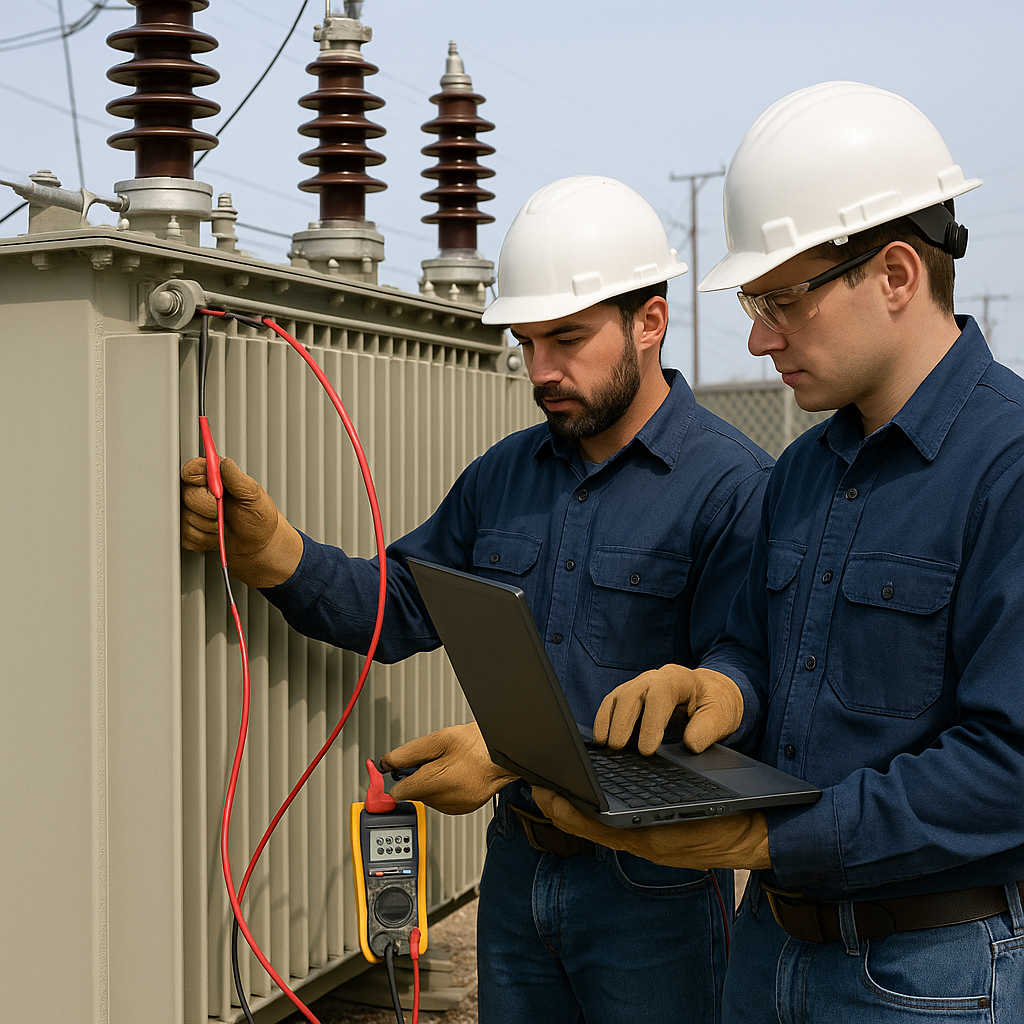
Transformer windings are responsible for transferring energy between circuits. Faults such as insulation breakdown, shorted turns, and winding deformation can severely impact performance and safety.
Routine testing helps identify:
- Loose or damaged windings
- Insulation degradation
- Shorted or open turns
- Moisture contamination
- Mechanical movement caused by faults
Detecting issues early reduces downtime and extends transformer life.
Key Transformer Winding Tests
Below are the most widely used diagnostic tests for assessing transformer health.
1. Winding Resistance Testing
Winding resistance testing measures the DC resistance of transformer windings. Abnormal resistance values can indicate loose connections, broken strands, or tap changer problems.
How It Works
A low DC test current is applied to each winding, and the resulting voltage drop is measured.
What It Detects
- High resistance from corrosion or loose joints
- Problems in tap changers
- Open circuits or broken conductor strands
Best Practices
- Perform testing at stabilized temperatures
- Compare results to manufacturer specs
- Trend results over time rather than relying on a single measurement
2. Insulation Resistance (Megger) Testing
Insulation resistance testing evaluates insulation health by applying a high DC voltage between winding and ground.
What It Detects
- Moisture ingress
- Deteriorated insulation
- Contaminants from heat or aging
Best Practices
- Run the test for 10 minutes when calculating the Polarization Index (the ratio of the 10-minute to 1-minute reading)
- Record Polarization Index (PI)
- Perform regularly to establish trending
3. Turns Ratio Testing (TTR)
A transformer’s turns ratio must match design specifications to ensure correct voltage output.
How It Works
Voltage is applied to one winding, and the induced voltage in the other winding is measured.
Symptoms of a Problem
- Incorrect voltage ratio
- Shorted turns
- Open windings or incorrect tap connections
Best Practices
- Compare phase-by-phase values and against nameplate ratio (IEEE C57.12.00 allows a tolerance of ±0.5% of the nameplate ratio at rated voltage)
- Perform after any tap changer maintenance
4. Sweep Frequency Response Analysis (SFRA)
SFRA testing is one of the best tools for detecting mechanical movement inside a transformer.
What It Detects
- Winding displacement
- Core shifting
- Fault-related deformation
Best Practices
- Compare to baseline fingerprints when available, following IEEE C57.149 guidance
- Use consistent connections and lead lengths
5. Power Factor (Doble) Testing
Power factor testing evaluates insulation integrity within the windings and bushings.
What It Detects
- Contamination
- Moisture
- Aging insulation
Best Practices
- Perform on a regular interval set by condition and criticality (ANSI/NETA MTS uses a 24-month baseline, shortened for critical or poor-condition units)
- Compare with previous test data
How to Interpret Transformer Diagnostic Results
Transformer diagnostics work best when combined. For example:
- High winding resistance + abnormal TTR may indicate internal winding damage.
- Poor insulation resistance + high power factor often means moisture contamination.
- A change in SFRA signature usually signals physical deformation.
Using multiple test methods provides a more complete picture of transformer health.
When to Perform Transformer Winding Testing
Transformers should be tested:
- During installation and commissioning
- After faults or protection trips
- After major maintenance (e.g., tap changer servicing)
- More frequently for mission-critical or poor-condition units
- Every 2–3 years for standard industrial transformers
Regular diagnostics allow asset managers to develop predictive maintenance plans and avoid unplanned outages.
Work With Experienced Transformer Testing Professionals
Accurate transformer diagnostics require specialized equipment and trained technicians. Professional testing teams can evaluate data trends, recommend corrective actions, and help ensure your transformers stay reliable and safe.
Substation Solutions provides:
- Transformer testing
- Dissolved gas analysis (DGA) and thermal online monitoring
- Testing and commissioning
- Substation maintenance and thermography
- Nationwide service from 12 kV to 500 kV
If you need reliable transformer testing or expert diagnostics, our team is ready to help.
Contact Substation Solutions today to schedule a transformer diagnostic assessment.